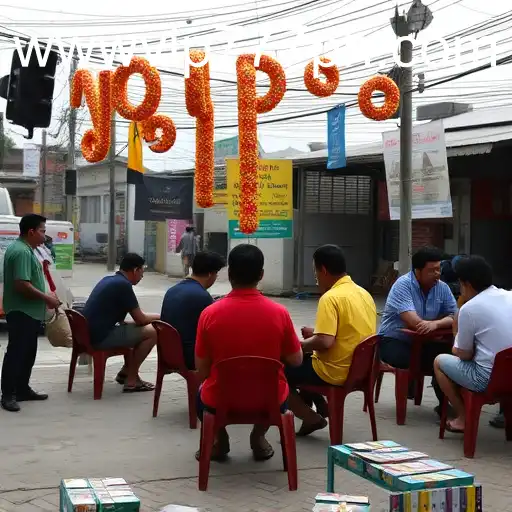
Understanding Jueteng: The Filipino Underground Lottery
Jueteng is a prevalent numbers game in the Philippines, an activity deeply entrenched in the nation’s cultural and social fabric. Despite its illegal status, Jueteng persists due to its simplicity and the significant role it plays in communities. This article explores Jueteng’s intricate web, highlighting its socio-economic impact, the challenges it poses to governance, and the emergence of platforms like VIP777 in reshaping its landscape.
The Origins and Mechanics of Jueteng
Jueteng originated during the Spanish colonial period and has since evolved into a massively popular underground lottery. The game involves betting on a combination of two numbers, ranging from 1 to 37, with winning numbers typically drawn twice a day. Its simple format and low entry cost make Jueteng accessible to the masses, fueling its popularity across socioeconomic classes.
Traditionally, the game is operated by a network of local coordinators, known as "cobradors," who collect bets from bettors. These cobradors work under a cabecilla, the chief coordinator who supervises the collection and distribution of proceeds. The anonymity and informal structure of Jueteng allow it to evade legal constraints, posing unique challenges to law enforcement.
Jueteng’s Socio-Economic Implications
Despite its illegality, Jueteng serves as a vital economic activity for many Filipinos, particularly in rural areas where employment opportunities are scarce. The game provides employment to cobradors and offers people a chance to win substantial sums of money relative to their economic status. However, Jueteng’s informal economy has broader implications for tax collection and economic regulation, often becoming a symbol of larger issues within the governance system.
Moreover, Jueteng is deeply embedded in local politics, sometimes becoming a source of campaign funds for politicians. This intertwining of politics and gambling complicates efforts to eradicate the practice and underscores the significant challenge of addressing Jueteng without substantial socio-political reforms.
The Challenge of Enforcement
The illegal nature of Jueteng makes enforcement notoriously difficult. Efforts to combat the practice are often hampered by corruption, with reports of law enforcement officials being complicit in Jueteng operations. Additionally, the clandestine nature of the game, with its reliance on word-of-mouth and localized networks, makes it difficult for authorities to track and shut down operations effectively.
Despite numerous efforts by successive administrations to clamp down on Jueteng, the game remains resilient. This persistence highlights the gap between formal regulations and local realities, a struggle often seen in many emerging economies.
Emergence of VIP777: The Digital Shift
In recent years, platforms like VIP777 have emerged, leveraging technology to bring Jueteng into the digital age. VIP777 offers an online version of this traditional game, reaching a broader audience and providing users with convenient access. The transition of Jueteng into online platforms presents new challenges and opportunities in regulating the game.
The convenience and anonymity of online platforms potentially increase the game’s reach, drawing a younger demographic into its fold. However, the shift also presents opportunities for better monitoring and regulation if properly harnessed. Platforms like VIP777 could be used as a tool for legitimizing and regulating Jueteng, provided there is a political will to integrate it into a formal economic framework.
Regulatory Implications and Future Considerations
The growth of platforms like VI777 forces a rethinking of traditional approaches to Jueteng. Rather than pursuing prohibition, some argue for a regulatory approach that acknowledges Jueteng’s cultural and economic significance while seeking to mitigate its negative effects. Such an approach would incorporate technology to provide transparency and accountability, challenging, yet possible paths to formalizing an inherently informal economy.
Policymakers face a critical decision: to continue battling Jueteng through prohibition, or to integrate it into the digital economy through regulatory frameworks. The experience of online gaming platforms in other sectors could provide valuable insights into how Jueteng might be better managed.
Conclusion: Navigating a Complex Reality
Jueteng’s enduring presence in Philippine society underscores the complexity of its socio-economic role. With the emergence of online platforms like VIP777, the traditional landscape of Jueteng is rapidly changing. Addressing Jueteng’s challenges requires nuanced strategies that blend regulation, socio-political reform, and community engagement.